



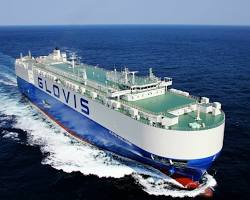
There are moments in the shipping industry that genuinely shift the dial. The naming and deployment of the Glovis Leader in April 2026 is one of them. Hyundai Glovis — one of the world’s most recognised finished vehicle logistics operators — has introduced the largest pure car and truck carrier (PCTC) ever built, with a capacity of 10,800 vehicles. For anyone moving a car, van, or fleet of vehicles overseas, this is news worth paying attention to.
At Ship cars ltd, we keep a close eye on developments like this. Understanding the global fleet — who’s building what, which routes are gaining capacity, and what the environmental standards look like — helps us give our customers better guidance, better pricing, and a clearer picture of how their vehicle will get from A to B.
Meet the Glovis Leader: Built for Scale
The Glovis Leader was officially handed over on 28 April 2026 at the Guangzhou Shipyard International (GSI) facility in China — a subsidiary of China State Shipbuilding Corporation. Built in partnership with HMM, one of South Korea’s largest shipping companies, the vessel is now operated by Hyundai Glovis on global vehicle export routes.
The numbers are genuinely impressive:
- Length: 230 metres
- Beam (width): 40 metres
- Gross tonnage: 102,590 tons
- Cargo decks: 14 (including five movable decks)
- Total cargo space: Equivalent to approximately 28 football pitches
- Vehicle capacity: 10,800 compact car equivalent units (CEU)
- Loading rate: One vehicle every eight seconds during continuous RoRo operation
- Full loading time: Approximately 24 hours of non-stop roll-on/roll-off operation
It is the first car carrier in maritime history to break the 10,000-vehicle barrier — and it does so with a clean-energy backbone that puts older vessels firmly in the shade.
Why the Green Credentials Matter to Shippers
The Glovis Leader is powered by a dual-fuel LNG (liquefied natural gas) propulsion engine, meeting the International Maritime Organisation’s Tier 3 emission standard — currently the most stringent in force on international routes. It also supports Alternative Maritime Power (AMP), meaning it can plug into shoreside electricity while docked rather than running its engines in port.
This matters in a practical sense. The European Union’s Emissions Trading System (ETS) now applies to shipping, and vessels that don’t meet evolving carbon benchmarks will face increasing costs — costs that eventually pass down to the customer. A modern, LNG-capable fleet like the one Hyundai Glovis is building is a direct response to that regulatory direction.
For anyone shipping a vehicle to or from Europe in 2026 and beyond, this type of greener infrastructure should reduce the risk of unexpected surcharges tied to environmental compliance. At Ship cars ltd, we factor exactly these kinds of considerations into the quotes and guidance we provide — whether you’re sending a single car to Australia or a fleet of commercial vehicles to the United States.
The Bigger Picture: A Global Capacity Problem Being Solved
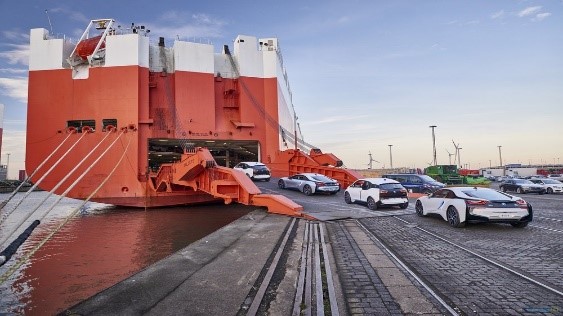
The Glovis Leader doesn’t exist in a vacuum. It’s part of a much larger investment decision made by Hyundai Glovis back in 2023, when its board approved a $1.84 billion commitment to build twelve vessels, each with a capacity of 10,800 CEU. Deliveries are expected to be completed by 2027, with the Glovis Leader being the first of the class to enter service.
The context for that investment is important. Post-COVID, automotive assembly plants gradually rebuilt output, but the RoRo sector hadn’t kept pace. Operators had scrapped or laid up vessels during the pandemic, and by the time demand returned, there simply weren’t enough car carriers to move vehicles efficiently. The result was longer port dwell times, stretched transit schedules, and in some cases, notable pricing pressure on shipping lanes — particularly those serving the Far East, Europe, and North America.
Surging finished car exports from China have compounded this. Chinese EV manufacturers and traditional automotive brands alike have been ramping up export volumes rapidly, particularly to European markets. At the same time, geopolitical disruption in the Red Sea forced many PCTCs onto longer detour routes around the Cape of Good Hope — adding transit time and burning additional capacity that would otherwise have been available elsewhere.
The Glovis Leader, and the eleven vessels that will follow it, are a direct structural response to all of this. More capacity on global routes means more options, steadier pricing, and better scheduling for everyone who depends on ocean RoRo freight — including our customers at Ship cars ltd.
What This Means If You’re Shipping a Car Right Now
When a company like Hyundai Glovis adds significant RoRo capacity to its global fleet, the effects ripple outward. More available space means carriers have more flexibility to offer competitive rates, more frequent sailings, and more route options — all of which benefit individual shippers.
At Ship cars ltd, we regularly use RoRo services on major global routes. A customer exporting a Land Rover Defender from Southampton to Melbourne, for example, or shipping a BMW 5 Series from Tilbury to New York, is booking onto exactly the kind of deep-sea PCTC network that vessels like the Glovis Leader will serve. More ships of this scale mean more reliable slot availability and less disruption during peak periods.
Customer example: A client recently shipped two Toyota Land Cruisers from the UK to Dubai using RoRo. With tightening capacity on the Middle East corridor over the past 18 months, lead times had stretched — but as new tonnage enters the market, departure windows are beginning to normalise. Their vehicles arrived within the expected transit window, fully intact, with no issues at discharge.
We’re also seeing the benefit on routes closer to home. RoRo services from the UK to Spain — with discharge at ports like Huelva and Cádiz — have historically been straightforward, but temporary capacity pressures affected scheduling at various points during 2024 and 2025. Greater fleet availability globally helps stabilise even these shorter-haul lanes.
Hyundai Glovis’s 2030 Ambition — And Why It’s Relevant
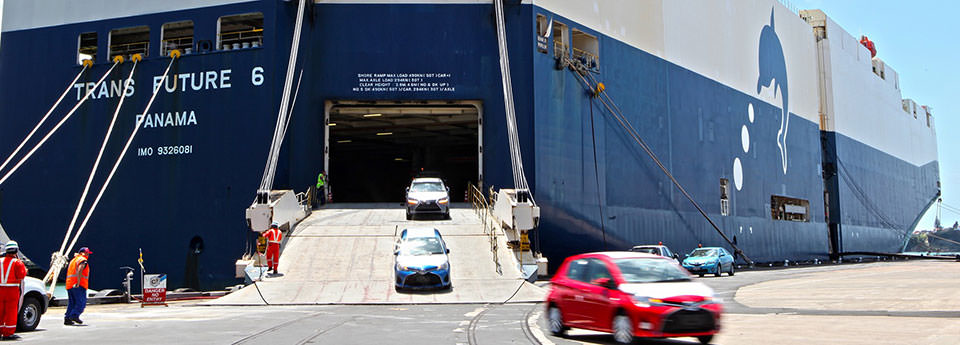
By 2030, Hyundai Glovis aims to expand its operating PCTC fleet to 128 vessels and grow its annual finished car seaborne transport volume from 3.4 million vehicles to 5 million. If achieved, that would represent more than 20% of the entire global finished car seaborne transport market — a position of significant influence over global shipping schedules, rates, and route development.
For shippers, this is a sign that the global car carrier market is entering a period of meaningful expansion. More capacity, cleaner ships, and greater operator scale generally translate into a more reliable and competitive environment for anyone moving vehicles overseas.
Ship cars ltd: Connecting You to the Best Vessels and Routes
We don’t just follow news like this out of curiosity — we use it to stay ahead for our customers. Whether you’re shipping a classic car in a container shipping from the UK to the USA, exporting a fleet of trucks to Australia, or sending a single motorbike to Europe, understanding the carriers, the vessels, and the global fleet landscape is part of how we deliver the best possible service.
Our team works across both RoRo and container shipping, meaning we can always recommend the right method based on your vehicle type, destination, timeline, and budget. We handle everything from documentation and port collection to discharge port formalities — and we keep you informed at every step.
Customer example: A small dealership in the north of England used Ship cars ltd to ship a consignment of six used vehicles to a buyer in Turkey. We arranged RoRo from a UK port, co-ordinated all export documentation, and the vehicles cleared Turkish customs without issue — the client described it as “the smoothest export we’ve done.”
The Glovis Leader is a landmark vessel. But what it really represents is a global industry stepping up — building bigger, cleaner, and smarter. At Ship cars ltd, we’re right alongside that progress, making sure our customers benefit from every development in international vehicle shipping.
For a quote on shipping your vehicle overseas — whether by RoRo or container — speak to the Ship cars ltd team today. We’ve got the experience, the network, and the knowledge to get your vehicle where it needs to go.