



If you’re shipping a vehicle internationally in 2026 — whether you’re importing into the UK or exporting overseas — you’re operating in one of the most active years of regulatory change since Brexit. New digital border systems, updated EU entry rules, expanded emissions obligations, and revised customs procedures are all coming into force across the course of this year. Some changes are already live. Others take effect mid-year.
At Ship cars ltd , keeping on top of this landscape isn’t optional — it’s part of the service we provide. This guide breaks down the key 2026 regulatory changes that affect vehicle shipping and explains exactly what they mean for you.
The UK Single Trade Window — Going Digital at the Border
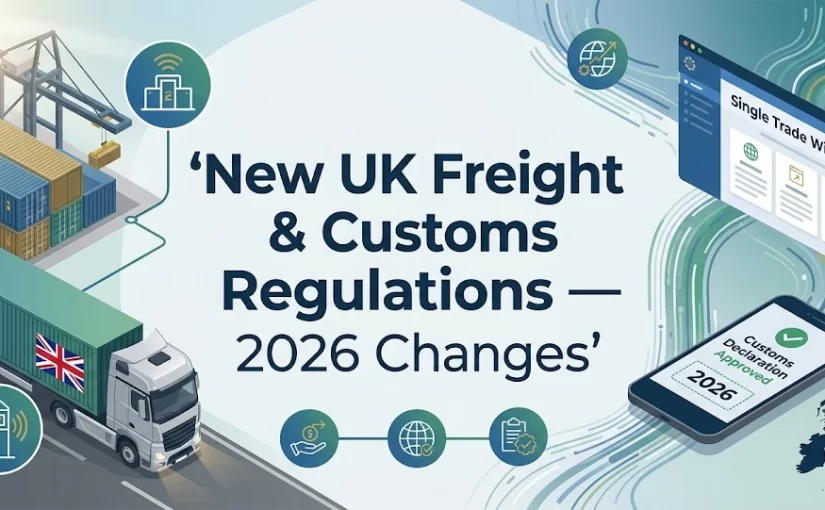
One of the most significant structural shifts in how UK customs operates is the progressive rollout of the UK Single Trade Window (STW) — a single digital portal backed by £180 million of government investment. The ambition is straightforward: instead of submitting the same data to multiple government systems (HMRC, Border Force, port health authorities), importers, exporters, and their agents will be able to fulfil all border obligations through one unified platform.
For vehicle shipping, this means customs import declarations, safety and security submissions, and any licensing requirements will increasingly be managed through one streamlined process. At Ship cars ltd, we submit all required documentation on your behalf — and as the STW functionality expands through 2025 and 2026, our ability to process border requirements efficiently only improves.
The direction of travel is clear. UK border management is going fully digital, and for customers who rely on us to handle the paperwork, the practical experience will be faster processing, fewer delays, and greater transparency at every stage.
NOVA — Still Mandatory for UK Imports
If you are importing a vehicle permanently into the UK, the Notification of Vehicle Arrivals (NOVA) requirement remains firmly in place — and it catches more people out than you might expect.
Under HMRC rules, you must notify HMRC within 14 days of your vehicle arriving in the UK. Until your NOVA application is processed, the DVLA will not register the vehicle. Miss the window and you may face penalties and delays that hold up your registration entirely.
This applies whether you’re importing a car from the EU, the USA, Australia, or anywhere else. It’s one of the first things we brief new customers on at Ship cars ltd — because no matter how smoothly your shipment goes, a missed NOVA deadline can cause real frustration at the final step.
Customer example: A customer who imported a 2019 Porsche 911 from Germany asked Ship cars ltd for guidance on post-arrival compliance. We flagged the NOVA requirement on day one, ensuring they filed within the 14-day window and had their vehicle registered without any delays.
ICS2 Mandatory for EU-Bound Road and Rail Freight
From 1 January 2026, the EU’s Import Control System 2 (ICS2) became fully mandatory for road and rail freight entering the EU. This replaces the older ICS1 framework and introduces significantly more stringent pre-arrival data requirements.
In practical terms, Entry Summary Declarations (ENS) must now be submitted at least one hour before a vehicle or consignment crosses into the EU by road. These declarations must include:
The operator’s EORI number
Accurate six-digit commodity codes
Full buyer and seller information
Detailed goods descriptions — vague terms are now automatically rejected by the system
Incomplete or incorrect declarations don’t just cause delays. They can result in fines of up to €5,000 per shipment. For anyone shipping commercial vehicles, used cars, or fleet vehicles into EU countries by road, the compliance bar has risen considerably. At Ship cars ltd, our operations team is fully up to speed on ICS2 requirements — we don’t leave data accuracy to chance.
ELO The French Mandatory Logistics Envelope
If your vehicle shipment routes through France — whether by road, through the Channel Tunnel, or via a French port — a new French customs requirement has been mandatory since early 2026: the Enveloppe Logistique Obligatoire (ELO), or Mandatory Logistics Envelope.
Every consignment moving between the UK and EU via France must now have a correctly completed digital ELO envelope created before it reaches the border. This envelope consolidates Entry Summary declarations, export and import customs declarations, and full vehicle and driver information.
Carriers arriving at Eurotunnel or French port terminals without a correctly completed ELO are simply refused entry — no exceptions, no discretion. For vehicle exporters and importers using the short-sea crossing routes, this is a live compliance requirement right now.
Our team at Ship cars ltd co-ordinates with road transport partners on all France-routed shipments to ensure ELO compliance is handled before any vehicle leaves the UK collection point.
EU Entry–Exit System (EES) — Now Active at All Schengen Crossings
The EU Entry–Exit System (EES) began its phased rollout in October 2025 and reached full implementation across all Schengen Area border crossings by April 2026. The system applies to all non-EU nationals — including UK citizens — entering the Schengen Area.
EES records biometric data including fingerprints and photographs, and logs entry and exit dates at border crossings. For vehicle shipping customers driving their vehicle into Europe — rather than shipping it — this is a change you’ll notice at the crossing. Processing times at busy crossings have extended while the system beds in, so factoring additional border time into overland delivery plans is sensible.
For shipped vehicles being discharged at European ports and collected by agents, EES does not affect the freight process directly — but it does affect any driver collecting a vehicle at a European port who enters the Schengen Area in the process.
UK ETS — New Carbon Costs for Domestic Maritime Shipping
From 1 July 2026, the UK Emissions Trading Scheme (ETS) expands to cover the domestic maritime sector. Compliance obligations fall on vessel operators rather than individual shippers — but the realistic expectation is that some of this cost will gradually be reflected in freight rates, particularly on shorter-haul routes.
For customers shipping vehicles on UK-EEA routes, vessels are now subject to both UK ETS and EU ETS obligations, covering 100% of voyage emissions between the two zones. On Northern Ireland routes, a 50% carbon pricing obligation applies under the UK ETS framework.
What this means in practice is that some shipping lines may begin applying visible emissions surcharges on invoices and quotes. At Ship cars ltd, we’re transparent about all cost components — if an emissions surcharge applies to your route, we’ll explain it clearly rather than burying it in the small print.
Electric Vehicle Rules of Origin — A 2026 Window Worth Using
For anyone exporting or importing electric vehicles between the UK and EU, there is genuinely good news in 2026. The UK and EU agreed to extend the existing Rules of Origin provisions under the Trade and Cooperation Agreement (TCA) until the end of 2026, meaning EVs traded between the two markets continue to qualify for zero tariffs provided minimum content requirements are met.
The planned tightening of battery content thresholds — which would have made qualifying for zero tariffs significantly harder — has been deferred to January 2027. If you are exporting EVs from the UK to the EU, or shipping EU-built EVs into the UK, 2026 remains a favourable window. From 2027, stricter thresholds could mean some vehicles attract a 10% tariff that currently doesn’t apply.
Customer example: A UK-based EV dealer used Ship cars ltd to ship a batch of electric vehicles to a buyer in Spain. With the extended Rules of Origin provisions in place, the consignment cleared customs under zero-tariff status — our team confirmed compliance eligibility before the shipment was booked, saving the client from an unexpected duty bill.
ETIAS — Coming for Freight Drivers in Late 2026
From the last quarter of 2026, a new travel authorisation requirement — ETIAS (European Travel Information and Authorisation System) — will become mandatory for non-EU nationals, including UK citizens, travelling to any of 30 European countries. This includes freight drivers making commercial journeys into EU member states.
ETIAS is a pre-travel electronic authorisation, similar in concept to the US ESTA system. It is not a visa but it is a mandatory requirement before crossing into the Schengen Area. For companies operating road transport drivers into Europe, ensuring driver compliance with ETIAS before late 2026 is essential to avoid disruption.
What This Means for Your Shipment — And How Ship cars ltd Helps
The 2026 regulatory environment is undeniably more complex than it was twelve months ago. Digital border systems, new pre-arrival declarations, expanded ETS obligations, and evolving EU entry requirements all represent genuine compliance responsibilities — and the penalties for getting it wrong are real.
At Ship cars ltd, regulatory compliance is not an afterthought — it’s built into every booking we handle. Whether you’re shipping a single car from the UK to Australia, exporting a fleet to the USA, or moving commercial vehicles into Europe, our team manages the documentation, declarations, and compliance requirements on your behalf. You focus on your vehicle. We handle the border. To get a quote or ask about how 2026 regulations affect your specific shipment, contact the Ship cars ltd team today.